Designing The Guardian's first Live Activities
Replacing a stream of match notifications with one live surface on the lock screen.

- Problem
- Readers followed live matches through separate push notifications. A new lock-screen feature had to fit alongside following and notifications without confusing anyone.
- What I did
- Defined the core experience (discovery, opt-in and Live Activity behaviour), scoped the usability test with UX Research, and explored how Live Activities could work for news.
- Result
- All 16 test participants turned it on easily, and 11 of 16 rated it very valuable. The football Live Activity shipped ahead of the 2026 World Cup.
The challenge
During a match, every goal or red card could send another push notification. Live Activities on iOS, and Live Updates on Android, offered one surface that updates throughout the game. Football was the first use case, ahead of the 2026 World Cup.
Designing the Live Activity was the easy part. The hard part was fitting it alongside following, notifications and live coverage, which readers already used.
I studied Apple Sports and FotMob, the iOS and Android platform rules, and our own notifications work (Notification Onboarding), which had separated following something from getting alerts about it.
Before Live Activities
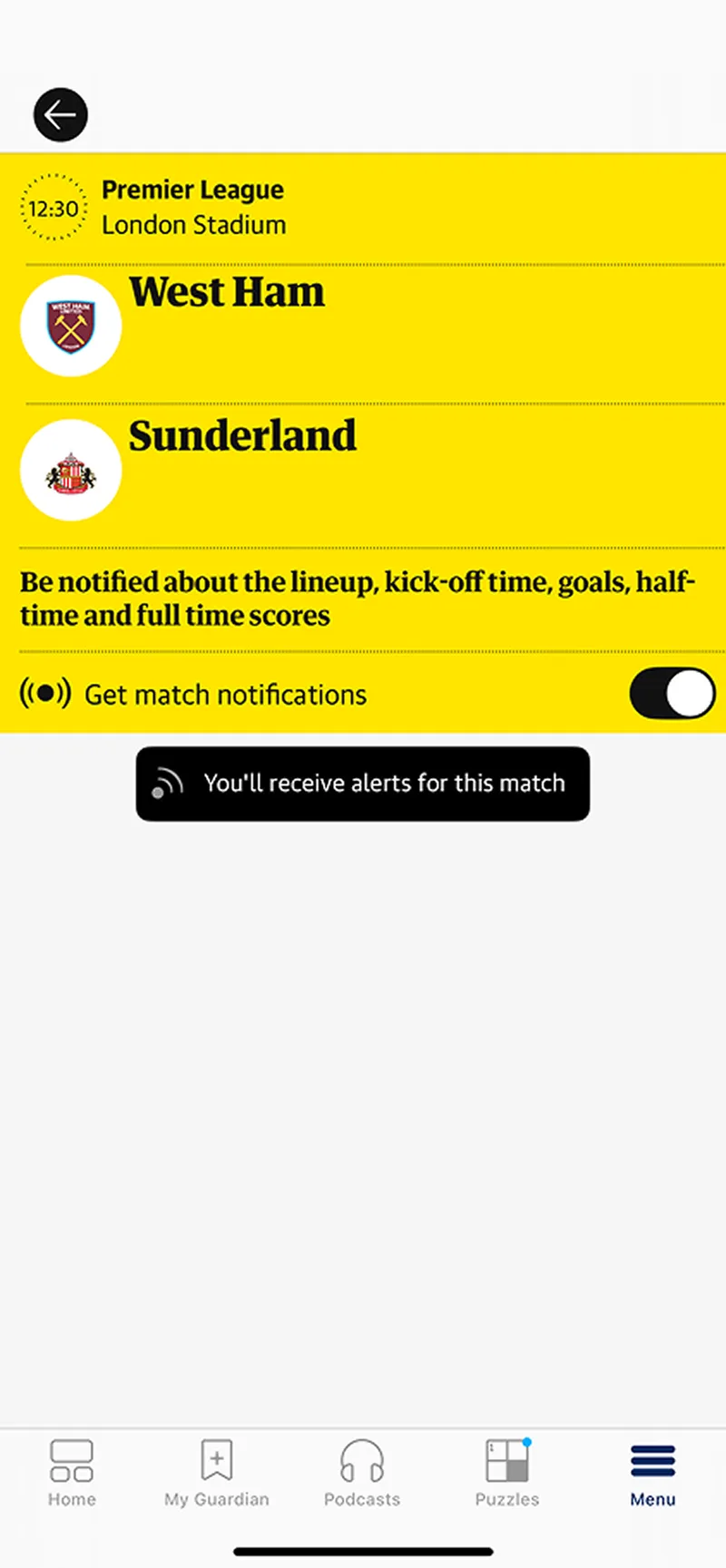
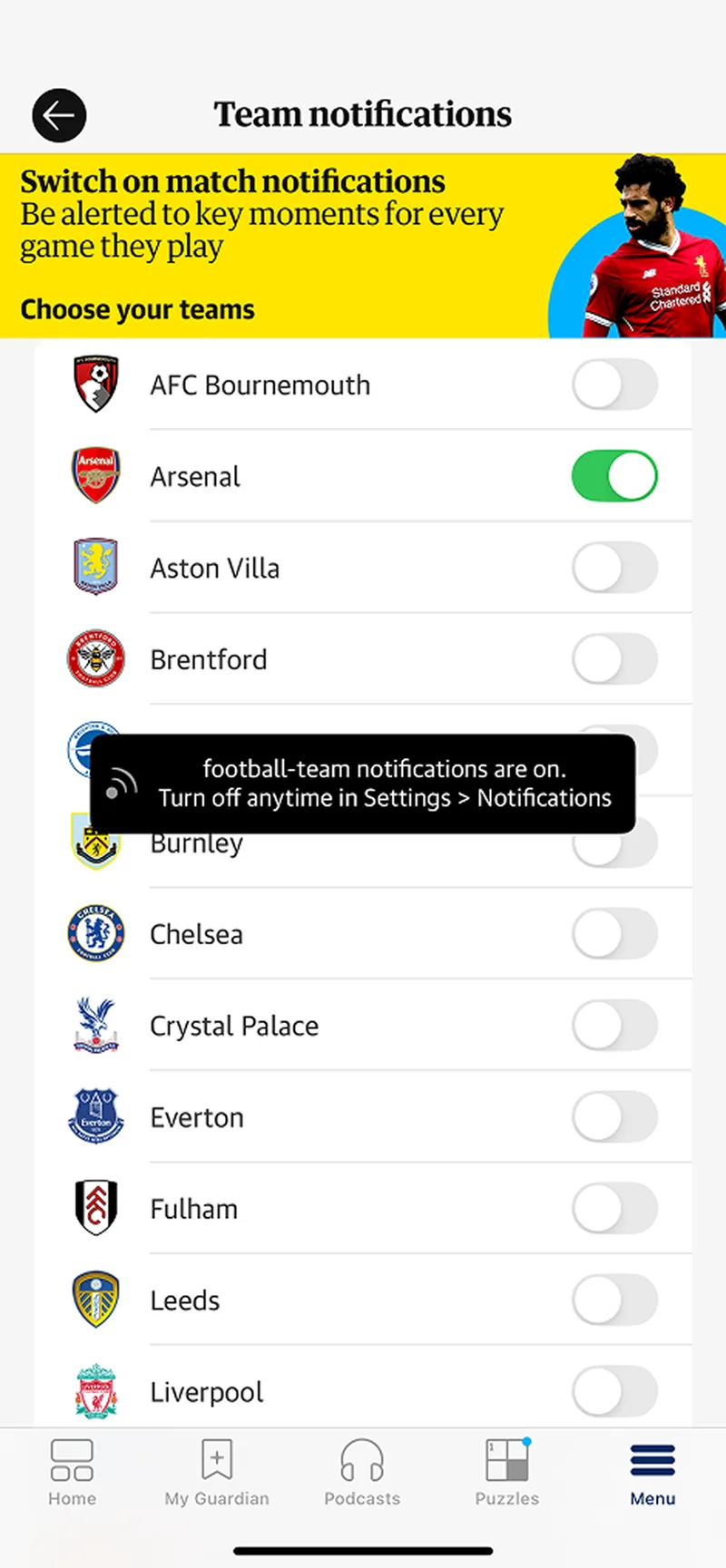
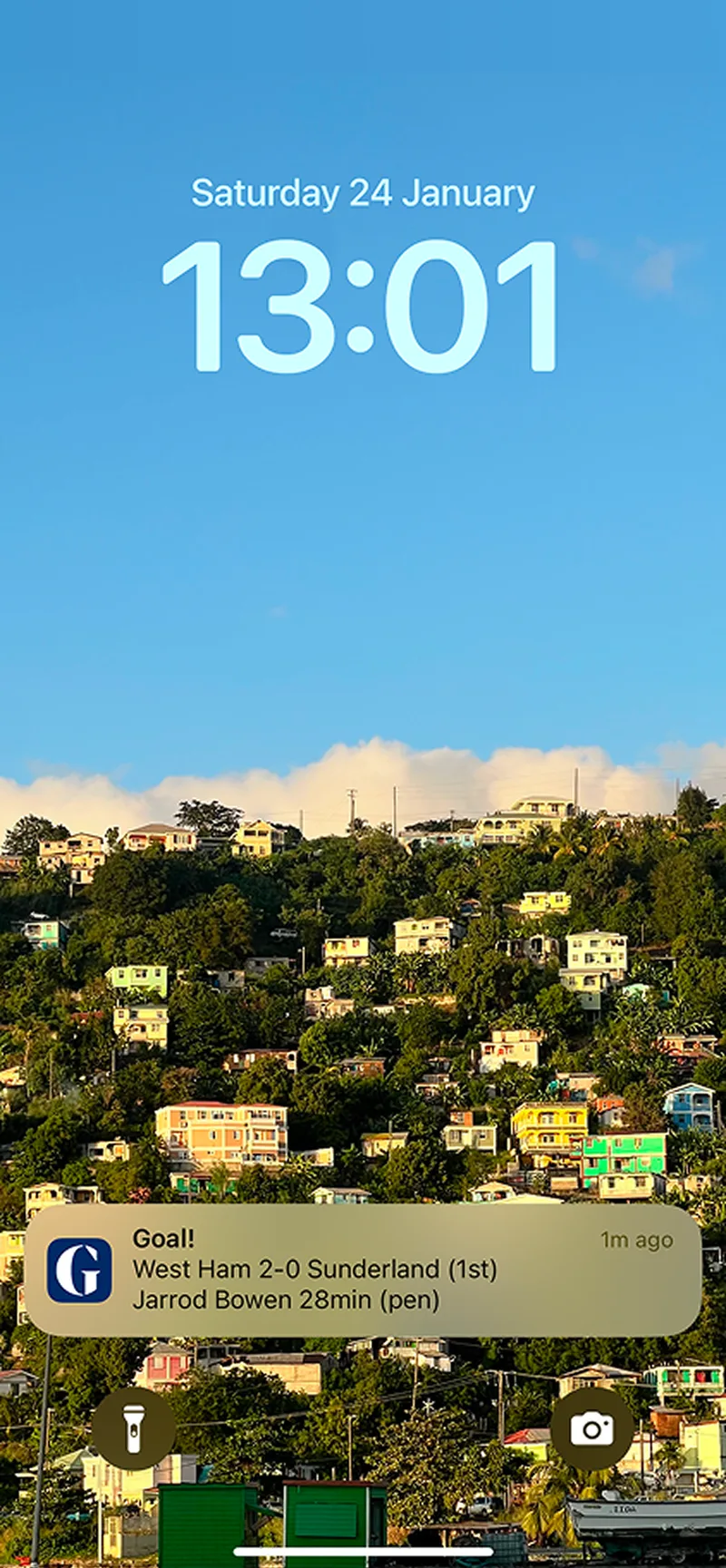
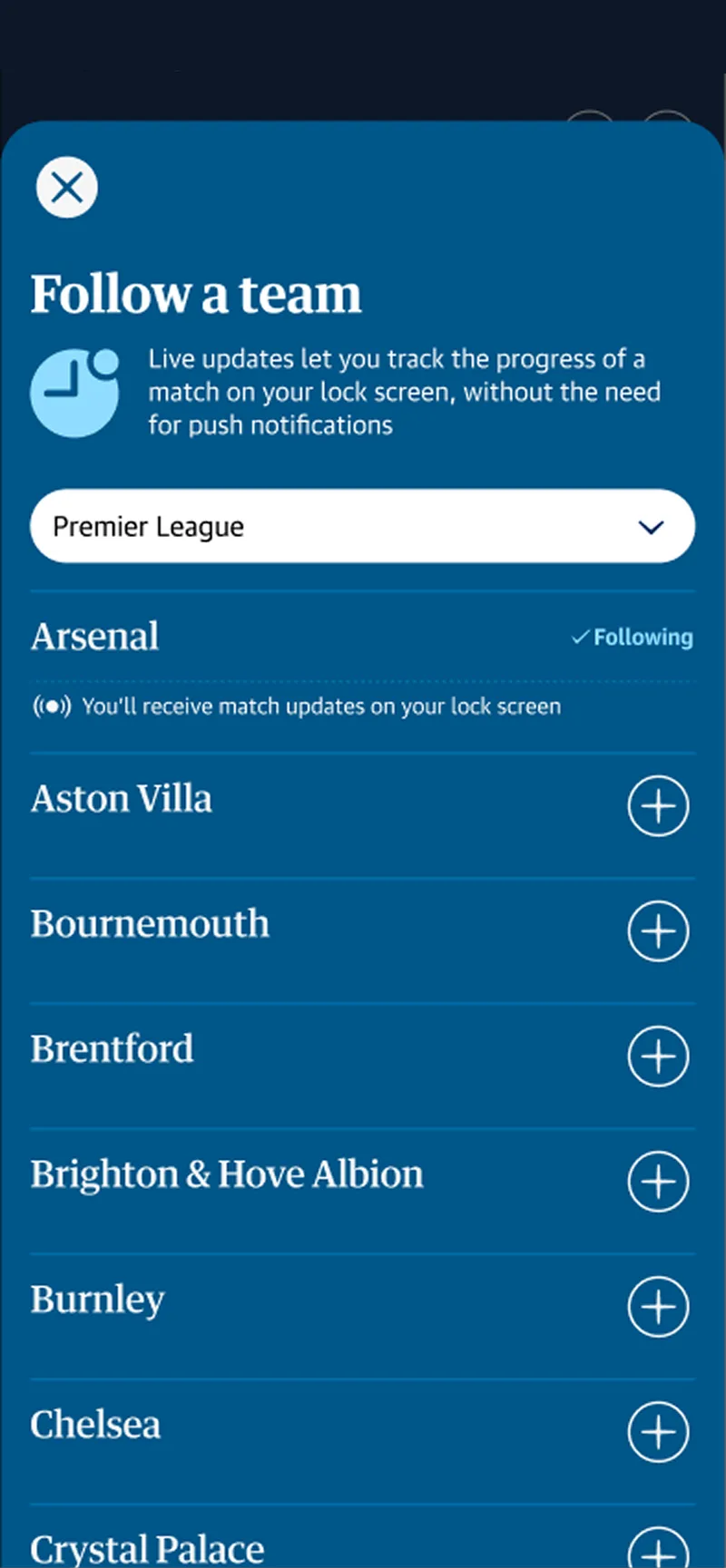
Designing the opt-in
My first direction kept following a team and Live Activities separate. As the work developed, the team chose a simpler model:
- Follow a team to get a Live Activity for every match they play.
- Follow a single match to get one for that game only.
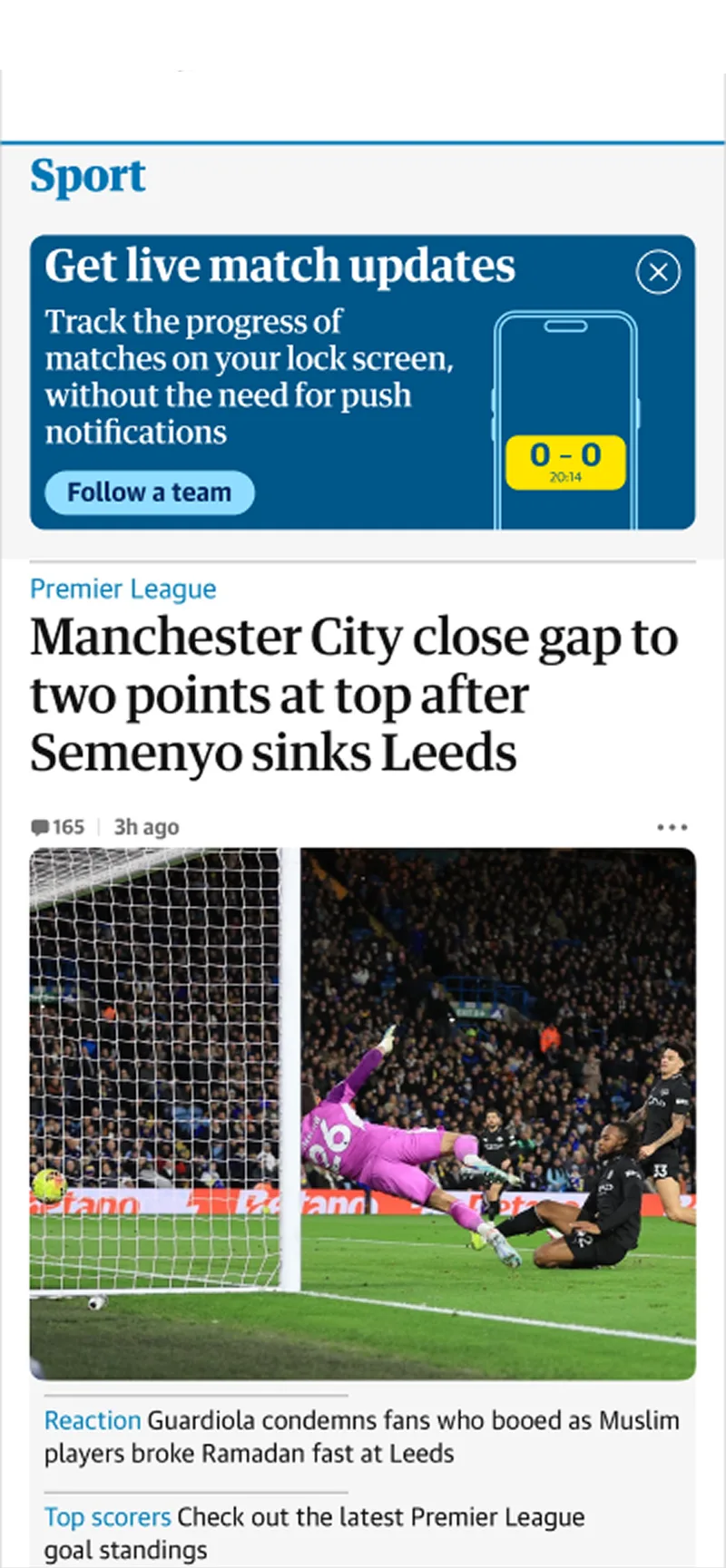
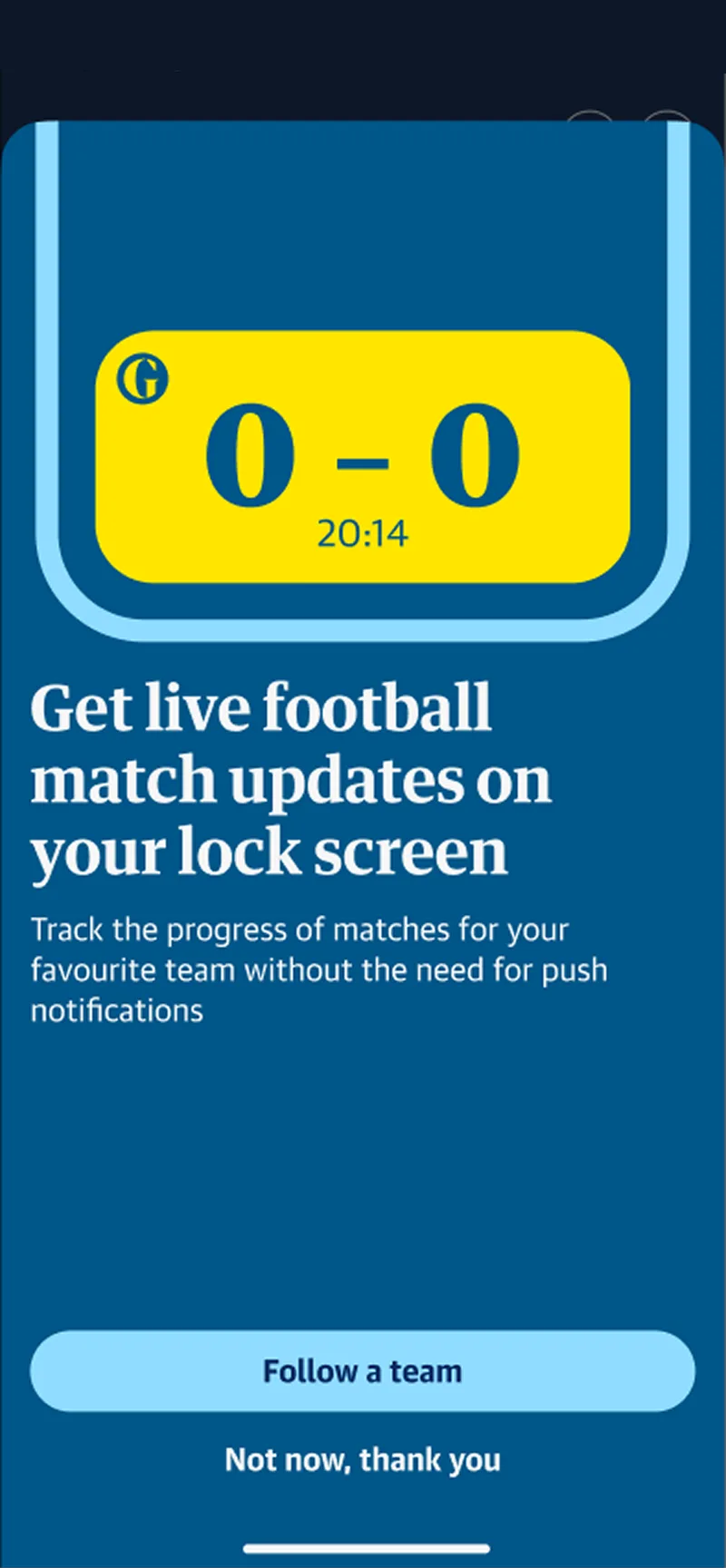
One action is easier than two, but it puts more weight on the word “follow”, so the copy had to say exactly what readers were signing up for. To help people find it, I reused the contextual prompts from Notification Onboarding: an inline card in Sport, a full-screen prompt and a team picker by league.
Early wireframes
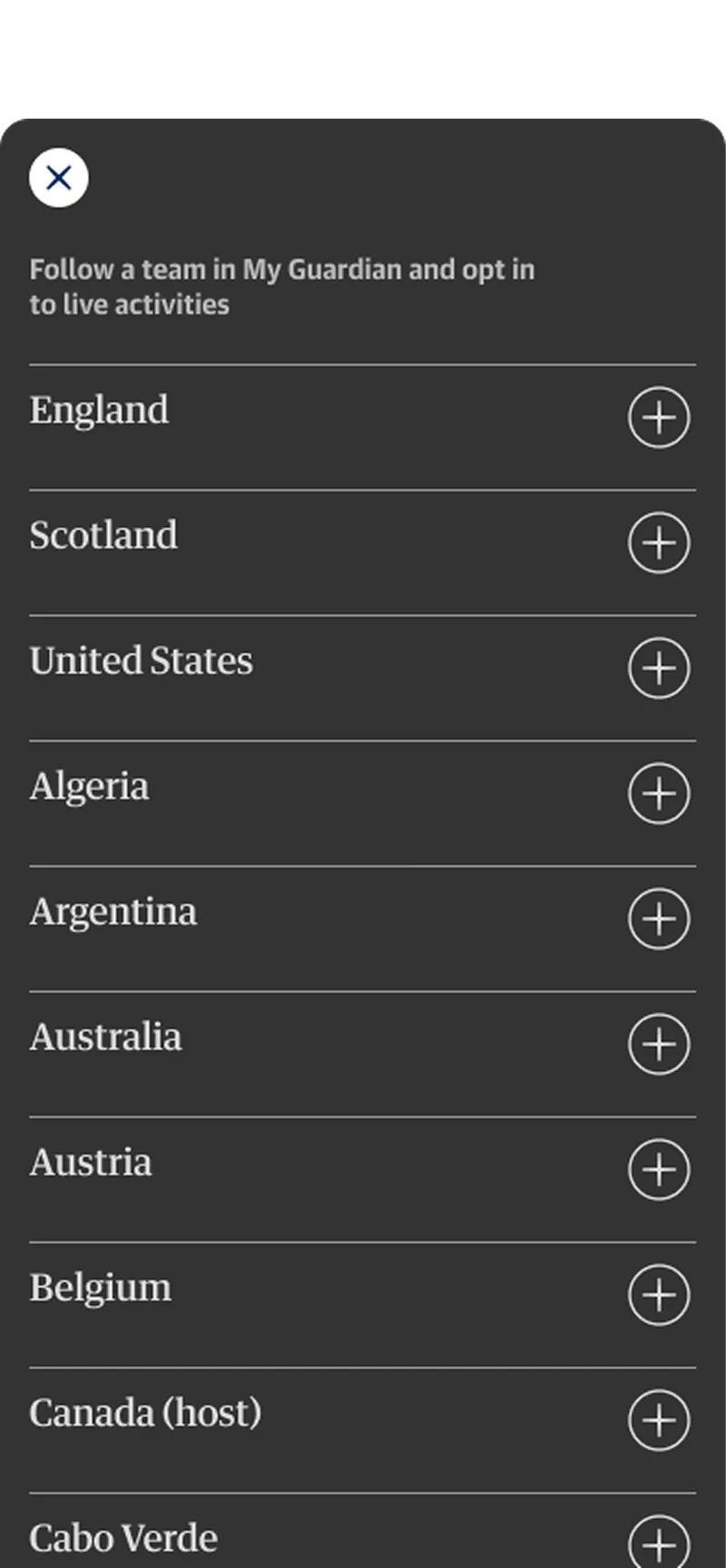
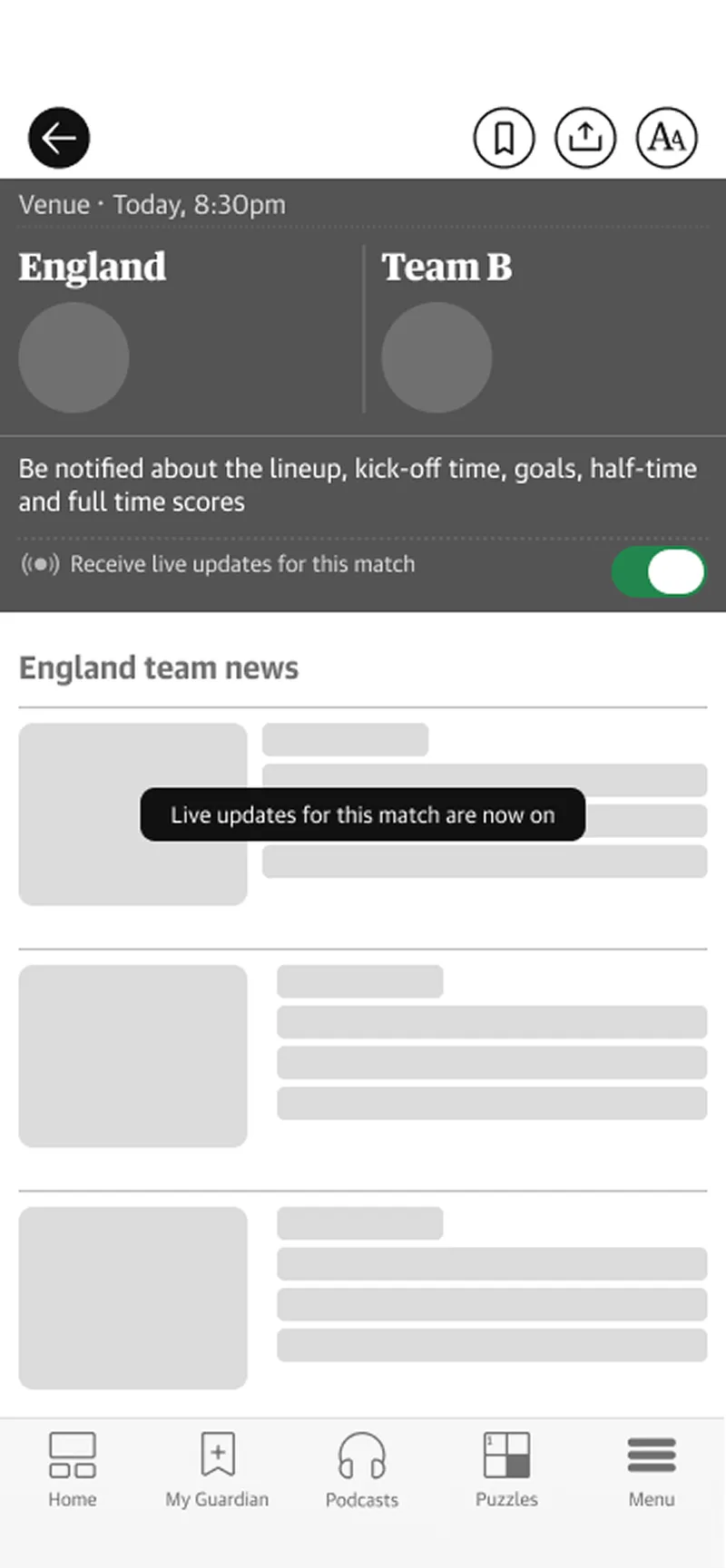
The opt-in flow
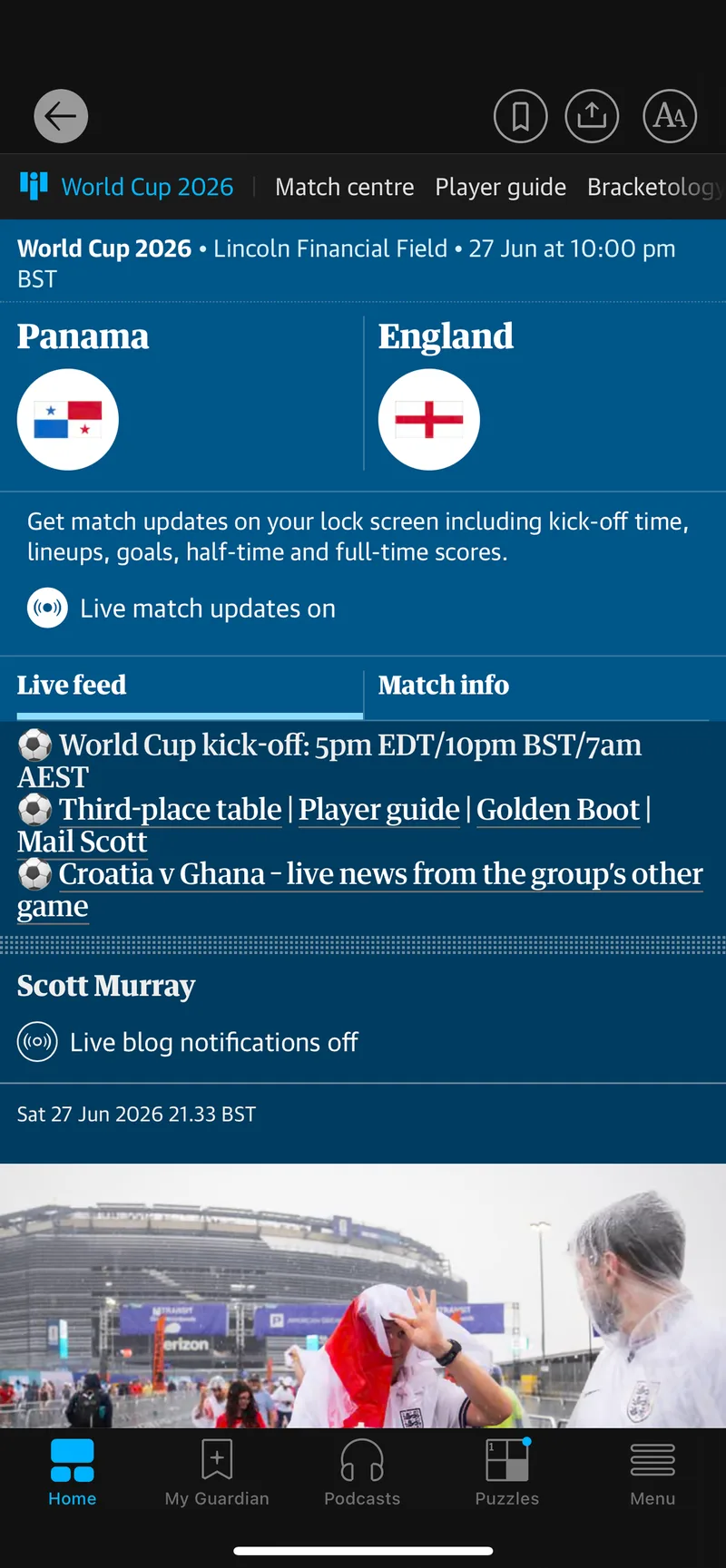
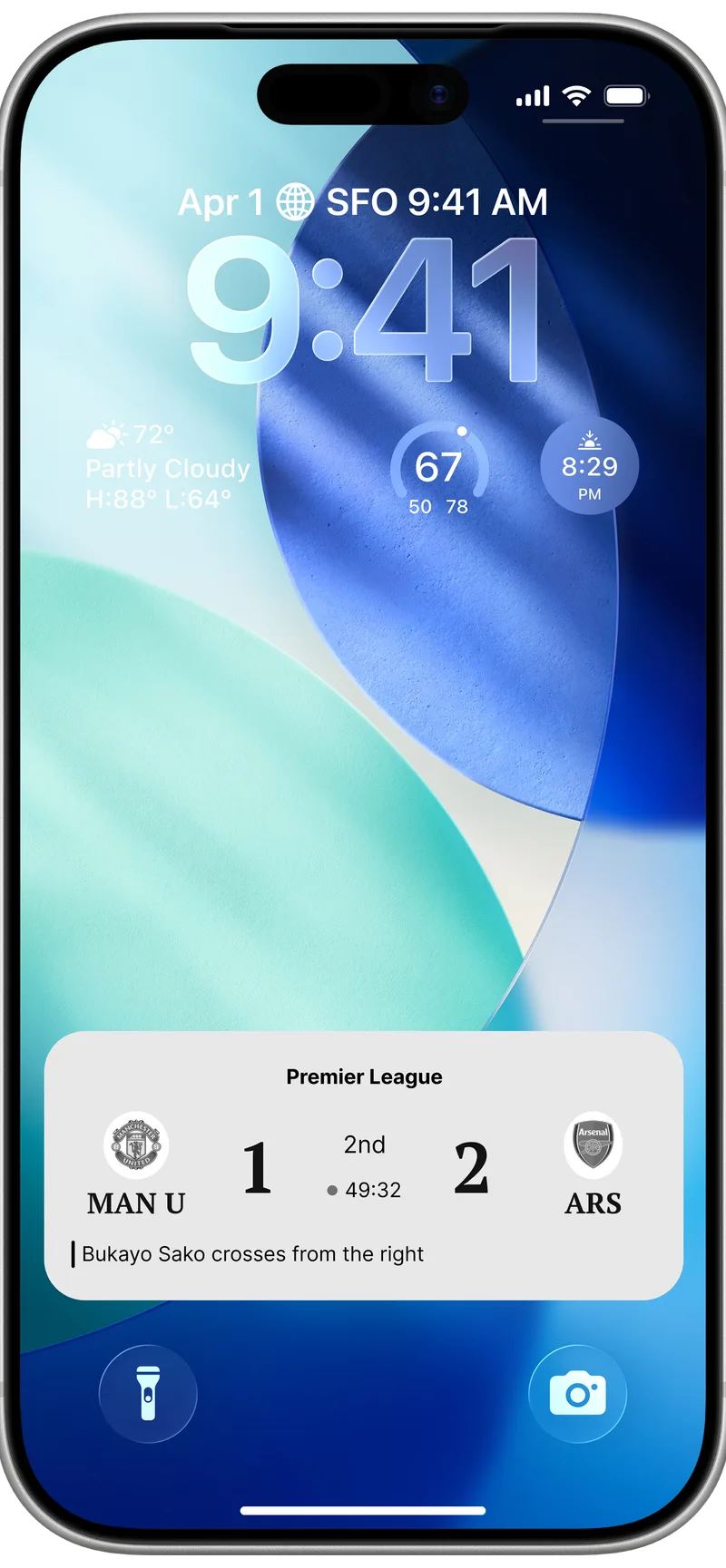
On the Live Activity itself, I prioritised the score, match time, key events and a route back into the live coverage, across upcoming, live and finished states.
Two matches at once
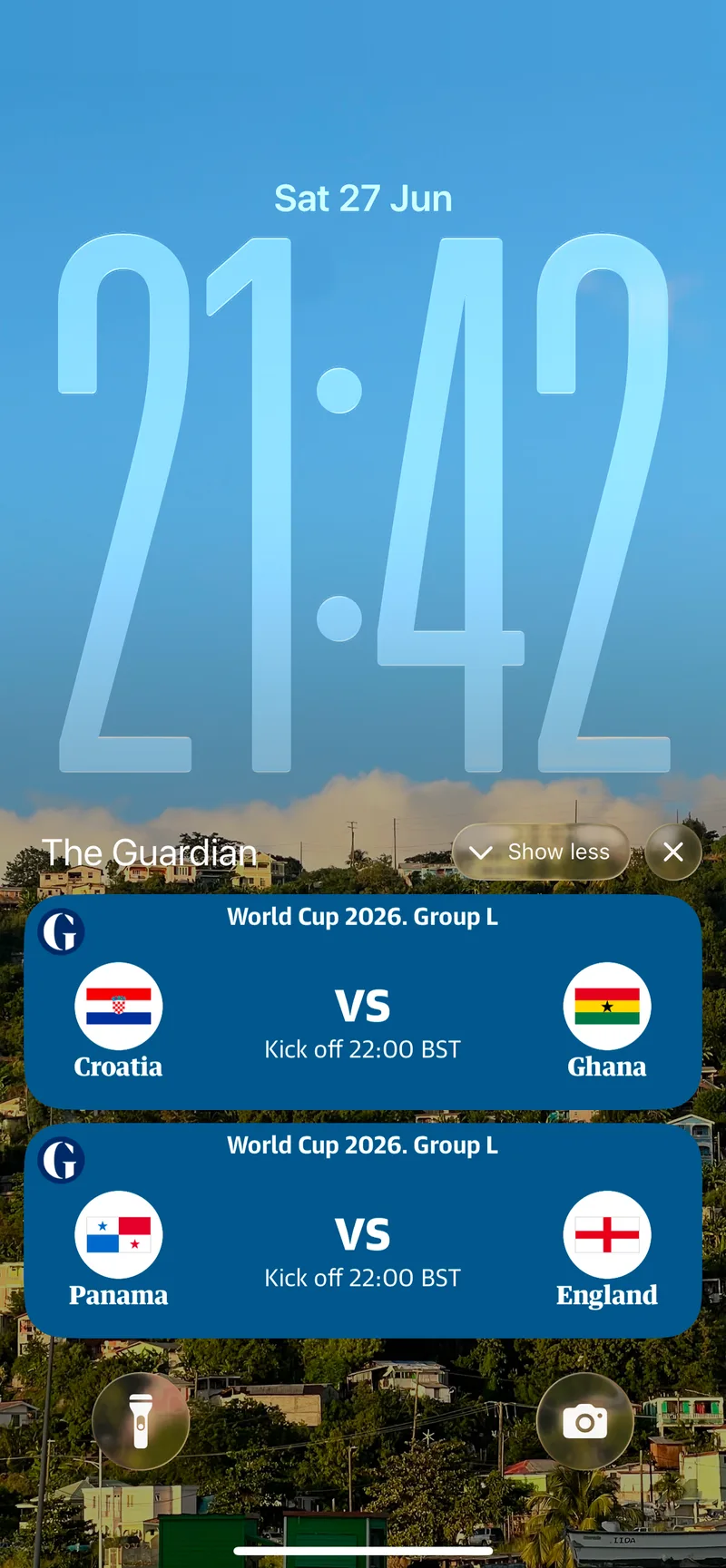
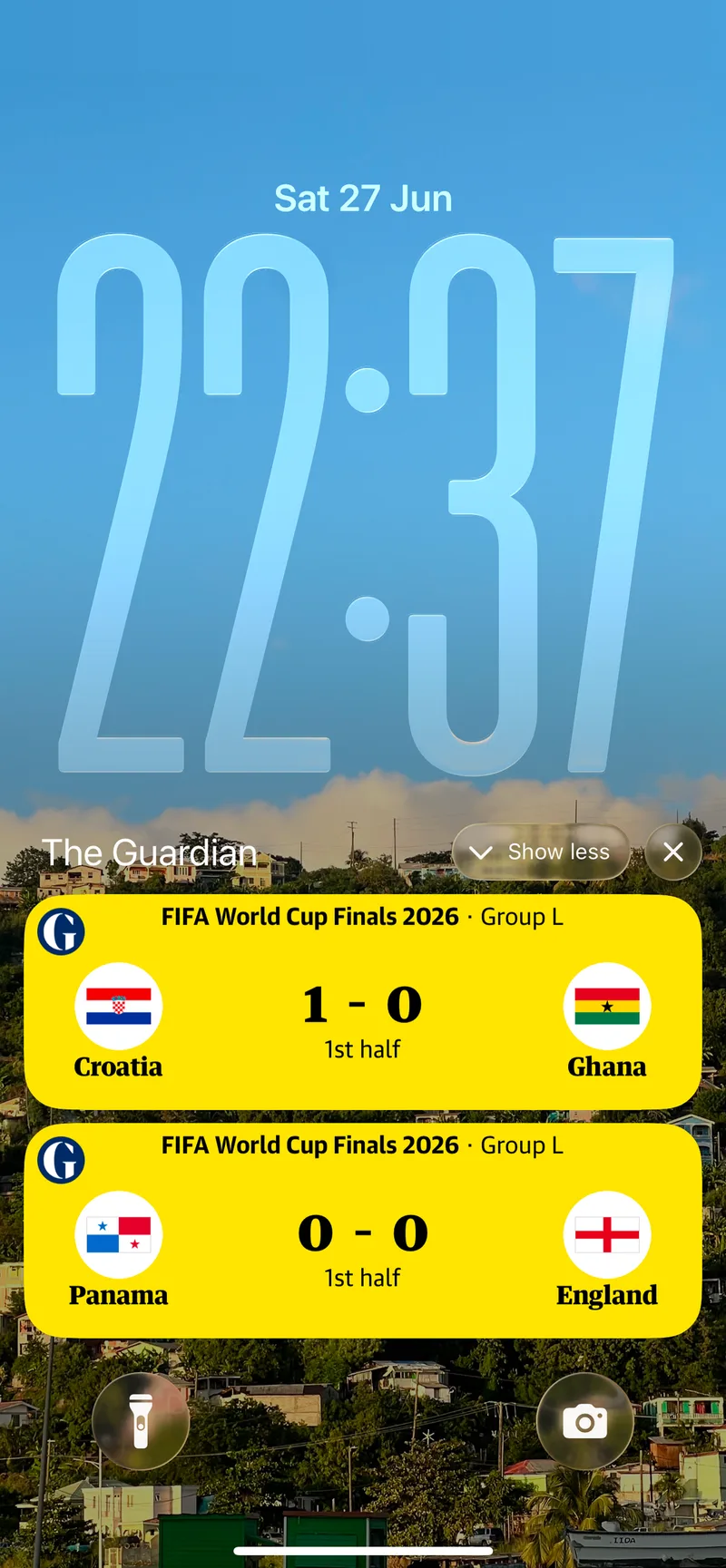
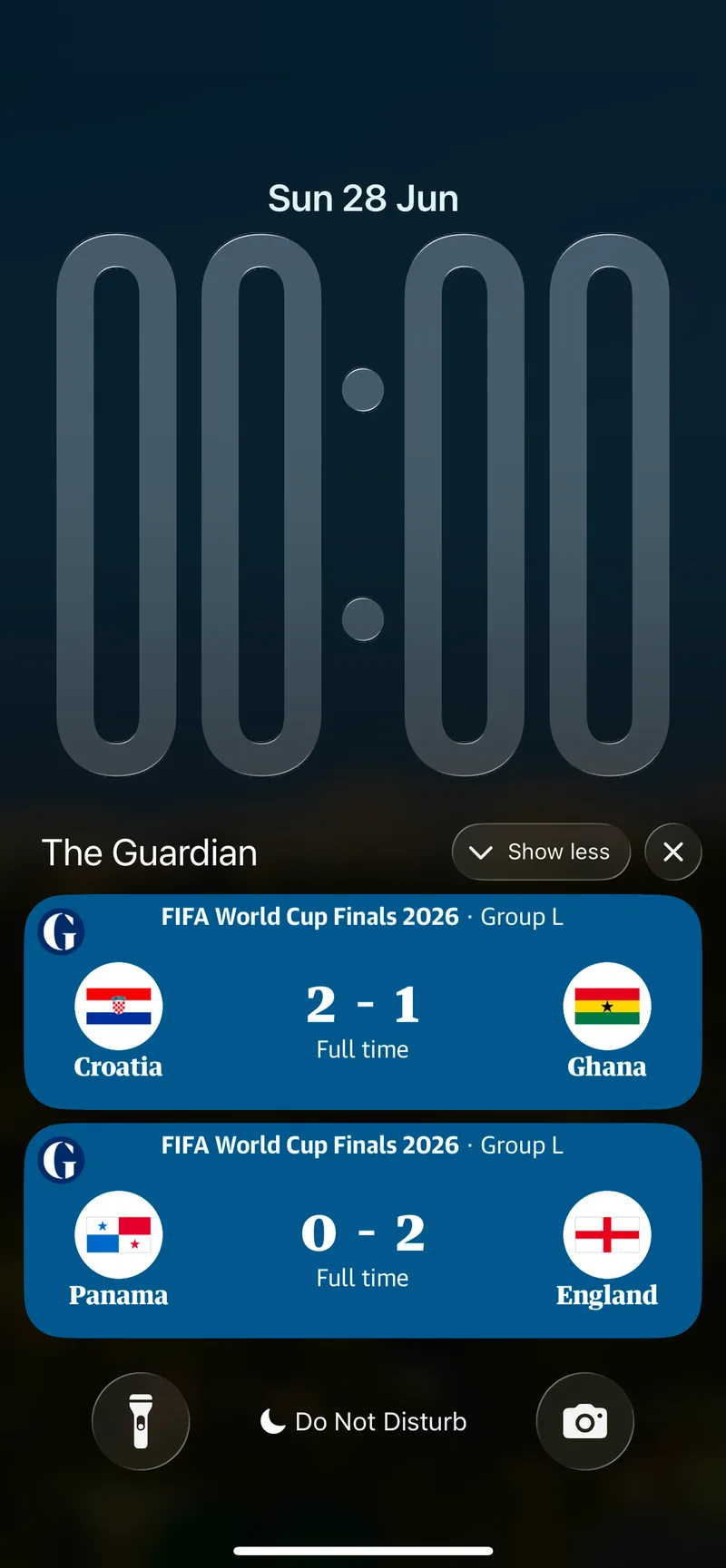
A technical compromise. We wanted every Live Activity to start on its own at kick-off, but technical constraints meant that wasn't always possible. The team agreed a fallback: if a reader hadn't opened the app before the match started, a push notification at kick-off would tell them the match was starting, and tapping it would start the Live Activity. Android needed small tweaks to work the same way, so both platforms behaved consistently.
Testing
I worked with the Design Lead and Research Lead to scope the test: what needed validating and why. I made sure the core journeys were clearly defined and testable before high-fidelity prototyping, and documented the design rationale. UX Research ran the study on UserTesting with 16 Guardian app users who follow football, 8 in the UK and 8 in the US.
- Followed England without help
- 16 of 16
- Understood that following a match meant that match only
- 13 of 16
- Expected lock-screen updates after following a team
- 6 of 16
- (5 expected push notifications instead)
- Rated Live Activities very valuable
- 11 of 16
- Would tap through to the live coverage
- 13 of 16
Three things stood out:
01 Easy to do, unclear what it did
Everyone could turn it on and off, but most saw Live Activities and push notifications as the same thing. Many hadn't used Live Activities before.
02 A team and a match mean different things
A match felt time-bound. A team felt like signing up for all coverage, not just live scores.
03 Valuable once seen, but it has to lead somewhere
People wanted more than a score, and expected to tap through for more.
The research recommended setting expectations at the moment of following, fixing the terminology before reusing it for news, and designing the onward journey into the live coverage.
Beyond sport
Once the sports flow was ready for UI design, and before testing began, I moved on to Live Activities for elections and live news. I wireframed election Live Activities that could adapt to different elections, using past results from the 2024 US presidential election and UK general elections as worked examples, showing seats, majorities and races called. For live news blogs, I explored and drafted criteria for when an event deserves one: it's still evolving, has a clear end, and offers something a push notification can't. Elections were deprioritised just before I left, so the team could focus on sport.


Outcome
The football Live Activity shipped ahead of the 2026 World Cup, with the visual design led by the Design Lead. My part was the groundwork: the opt-in model, the core journeys that were tested, the content priorities, and the thinking for taking Live Activities beyond sport.
Reflection
Easy isn't the same as understood. Everyone completed the tasks, but fewer than half knew what they'd switched on. Task success alone would have hidden the biggest risk.
Design work should be research-ready. Defining the journeys clearly before prototyping made the test sharper. Next time, I want to be more involved in the test plan and synthesis, not just the scoping.